November 2025
NOTE FROM PRESIDENT WAG
Members,
Mark your calendars!
The date for next AHRS Business meeting and Christmas Party will fall on Monday, Dec 29th, 2025. Doors open at 6:00 PM, a short annual meeting at 6:30 PM and dinner at 7:00 PM. The business meeting will include the election on officer and board member for 2026. The meeting will be in person only so we have a list started for people to sign up (name, guest(s), contact number, and what you will bring). The Society will provide drinks, meats, and rolls; let us know if you have any serious allergies or food issues. Ideally, sign up in the shop in person or call/text/email Steven Westbrook or me to we can keep the list up-to-date.
(So, save the Zoom link for the next one in January:
https://us02web.zoom.us/j/86330579924?pwd=ckZLWEJMb0V2ajhBUzh0S2liQnlmZz09
Meeting ID: 863 3057 9924 Passcode: 631140)
Mike Woodruff was such an integral part of AHRS and will be missed on many levels. We continue to transition his tasks and duties to current members, especially Steven and me for the time being. If a matter that Mike would have handled arises, let me, Steven, or another officer or board member know.
· We have opened a new checking account appropriate for a non-profit and are “updating the books”.
· Our credit union CD account has been updated.
· We can still accept payments on PayPal and hope to maintain all other financial functions.
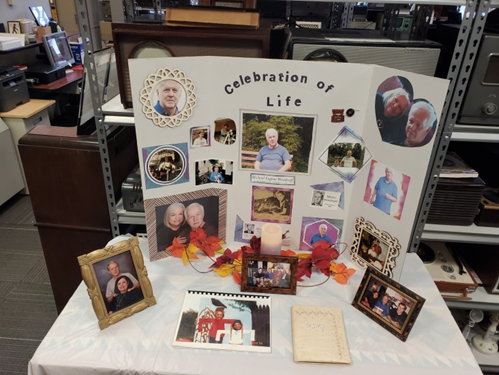
There was a celebration of Mike’s life held at the shop on Friday, Nov 14th, (which I missed, being out of the country) but which a number of our members attended.
It’s that time of year to start thinking about several things:
· Yes, dues and membership renewals for 2026 are being accepted via cash, check, and PayPal as usual.
· The Nominating CMTE has been formed, and all our officer positions are up for re-election as are the three Board members rotating off their 3-year terms (Dave Johnson, Tom Killian, and “Doc” Holaday). If you wish to volunteer to serve in AHRS leadership, let John Outland or John Herndon know; also, we can take nominations from the floor at the yearend business meeting on the 29th.
We will have a brief update of events from 2025 and those planned for 2026 but let leadership know if you have other topics to discuss by the general membership.
Boyd’s next class scheduled for Saturday, Jan 10th, 2025, at 9:00 AM in person and via Zoom; he plans to discuss more troubleshooting.
The following link remains in effect:
https://us02web..us/j/88180351990?pwd=N2lucjB3WVhtR05nTSs5S0xGcURadz09
His last class was Dec 1stand covered low and high pass filters, time constants with capacitors, and a look at practical applications in schematics.
Let me thank the Technology CMTE and chair Boyd Bailey for holding its first follow-up meeting Nov 18th. Topics discussed included adoption of a password manager, AHRS computer backup and integration options, and our shop printer’s unreliability. We now have a new printer integrated into the shop PC and our Wi-Fi network. And thanks again to Boyd for repairing one of our TV-7 tube testers which was somewhat unreliable, but when he got “under the hood” there were major problems to repair on a unit that arguably might’ve be considered for parts. Boyd, we owe ya!
Save the date! The BirmingHamfest will be the first Friday afternoon and Saturday in March, 2026 (6th and 7th) ; details when we get closer. Montgomery’s Hamfest was on Nov 8th and was attended by Society. Dave Cisco and Robert Cain are working on a presentation about the History of AHRS, including pivotal individuals who are no longer active or with us. Hopefully, this will be available at an upcoming business meeting and evolve into our forum for BirmingHamfest. We have another potential program from John Green on radio astronomy in the works for early next year.
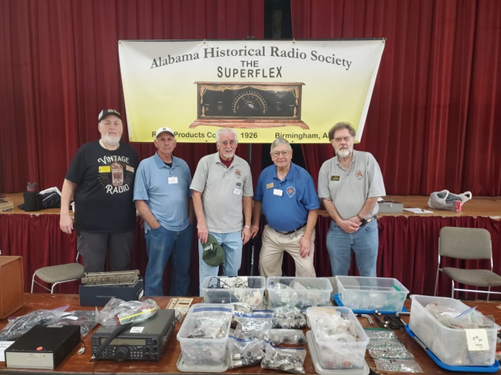
Member Rick Curl helped man the video control console panel for the national broadcast of the annual Birmingham Veterans Day Parade.

I wish to thank VP Steven Westbrook for keeping things running whilst I was gone from the end of October until mid-November. We traveled to Jordan, Cairo, and the upper Nile, a trip I’ve wanted to do for years. Plenty of antiquities (cars, mummies), but no antique radios…

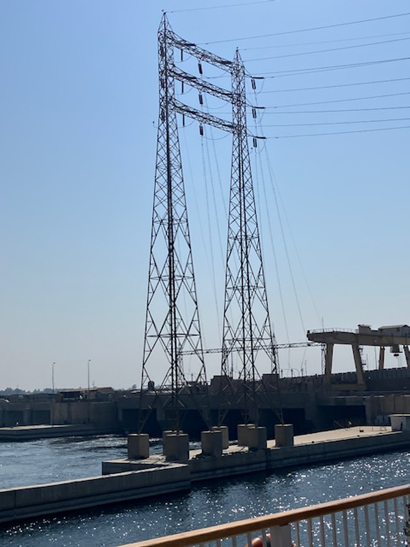
We passed through a lock on the Nile at the older, smaller Aswan dam, not the High Dam that created Lake Nasser. On the left above, we see the water from the turbines re-entering the Nile and (right) wires delivering electricity. I took these for the Alabama Power guys in the Society.

Of course, here is the obligatory photo of the Great Pyramid and Sphinx. The Great Egyptian Museum has just opened and is a huge and unbelievable display of antiquities including the horde from Tutankhamen’s tomb discovered in the 1920’s in the Valley of the Kings near Luxor.
Cairo is a city of about 25 million people with many contrasts and a culture quite different from ours. The cell service was good and US dollars and VISA cards widely accepted, but don’t drink the tap water or eat street food….
We were back in plenty of time to celebrate Thanksgiving and hope everyone did as well. Hoping to see many of you with guests in a few weeks.
Respectfully submitted, (mostly) enjoying college football (now that both my LSU and Auburn Tigers have new coaches), and (mostly) welcoming cooler temps, I remain,
President Wag, AHRS
When Pirates Ruled the (Air) Waves
From Radio Luxembourg to Radio Caroline, the pirates who brought British broadcasting—and pop culture—alive.
I’m constantly reminded of the many differences between life today and the world in which I grew up, specifically in England during the 1960s and 1970s. Take the accessibility of music, for example. Today, we live in a world where almost every musical genre imaginable is instantly accessible. Streaming platforms like Spotify, Apple Music, and YouTube host tens of millions of tracks, ranging from global chart-toppers to obscure regional styles.
Algorithms, playlists, and social media recommendations mean that listeners routinely stumble across artists and genres they’ve never heard of—sometimes from the other side of the world. TikTok trends can catapult a forgotten song from the 1980s into the charts, while online communities share and celebrate everything from Scandinavian folk metal to Japanese city pop.
Another aspect of this is that niche styles blend, mutate, and cross-pollinate in ways no one could have imagined half a century ago. Jazz has splintered into smooth, fusion, and experimental forms; country has merged with pop and rap; metal ranges from classic to symphonic to doom; and global genres—Afrobeats, K-pop, reggaeton, Latin trap, bhangra, and countless others—fill playlists alongside indie folk, lo-fi chill, ambient electronica, and hyperpop. Streaming platforms now let listeners wander freely across this vast sonic landscape, discovering subgenres as specialized as vaporwave, dark synth, or neo-soul with a single tap.
Things were very different in England at the beginning of the 1960s. Commercial radio didn’t exist at that time, and advertising on the air was strictly prohibited. Only the British Broadcasting Corporation (BBC) was legally allowed to broadcast radio in the UK.
There were three BBC radio channels in 1960: The Home Service, established in 1939, which offered news, drama, talks, current affairs, and educational programming; The Light Programme, established in 1945, which offered variety shows, comedy, dance bands, and (cautiously) popular music; and The Third Programme, established in 1964, which was a highbrow cultural channel featuring classical music, poetry readings, and serious discussion.
By the early 1960s, this trio formed a distinctly middle-aged soundscape. The BBC saw itself as a national educator rather than a jukebox. For example, The Light Programme’s musical output was dominated by dance bands and light orchestras, middle-of-the-road crooners and vocalists, musical theatre and film songs, comedy and variety shows, and… as a “tail end Charlie”… occasional “pop” coverage. In this latter case, we’re talking about shows like Family Favorites and Pick of the Pops. These featured a few current chart hits, but only for short segments, and often performed by the BBC Northern Dance Orchestra rather than the original artists.
When it came to appealing to a younger audience, what sort of music wasn’t played on the UK radio? Just about everything, really. A few examples are Rock ’n’ Roll and Early Pop (by the early 1960s, the BBC still viewed rock ’n’ roll as a passing fad and largely ignored it), emerging styles like American Rhythm and Blues (R&B) and Soul were virtually absent, and even bands like The Beatles, Gerry and the Pacemakers, The Searchers, and The Hollies received minimal air time (you might hear them once or twice a week on the radio… if you were lucky).
As I mentioned in a couple of earlier Throwback Thursdays columns—Be Kind, Rewind: The Home Video Revolution and Student Life and Sound Systems in the Seventies—for many young people, the only real exposure to offbeat music (no “off-beat” pun intended) was the local record shop. If the owner knew you and your tastes, he might say, “Here’s a new group you might like.” Other ways in which young people discovered music were word of mouth and live gigs. Additionally, the music press—in the form of weekly magazines such as New Musical Express (NME), Melody Maker, and later Sounds—had a hugely influential impact.
The scene was set for the emergence of what came to be known as Pirate Radio. In 1964, Irish businessman Ronan O’Rahilly bought a ship, fitted it with a powerful transmitter, and anchored it just outside the UK’s three-mile limit. He named it Radio Caroline, allegedly after Caroline Kennedy, who was a symbol of youthful energy and rebellion.
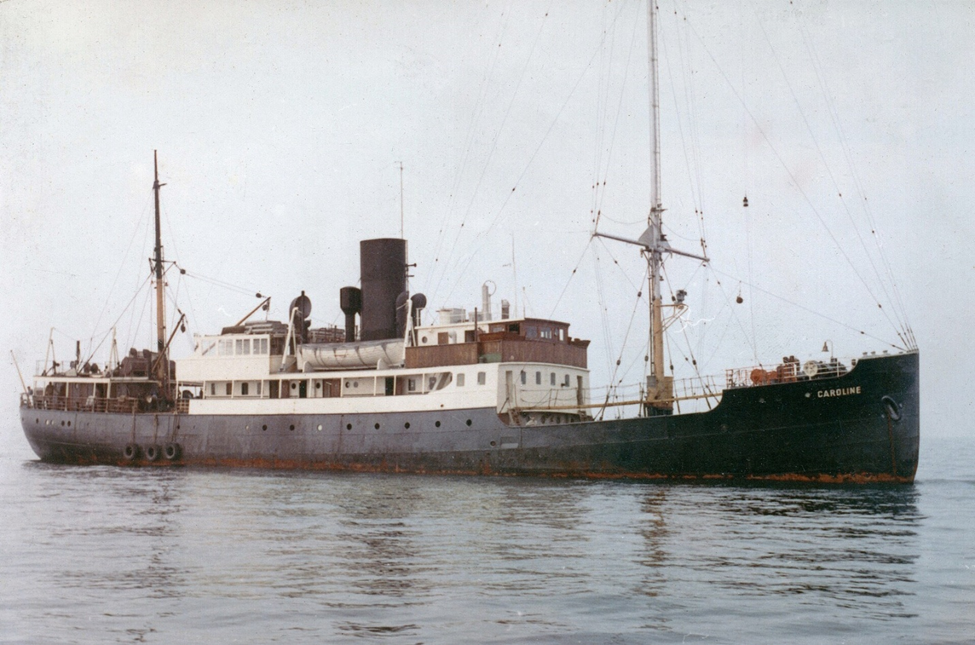
Radio Caroline went on air in March 1964. The DJs were fresh, informal, and full of energy. They sounded nothing like the BBC’s stiff announcers. They played records by The Beatles, The Rolling Stones, The Kinks, and countless other artists that the BBC largely ignored. Within months, millions of listeners were tuning in daily, and the BBC’s monopoly was effectively broken—even though the pirates were technically illegal.
Later in 1964, Radio London (also known as “Big L” and “Wonderful Radio London”) joined the party. Broadcasting from a ship called the Galaxy, it drew inspiration from slick American “Top-40” stations. With jingles, tight formatting, and upbeat presentation, Radio London felt truly modern—fast-paced, brash, and exciting. It quickly became the most professional and popular of all the offshore stations.
Although it’s not an entirely accurate portrayal in a historical sense, the 2009 movie The Boat That Rocked—which is loosely based on Radio Caroline, Radio London, and other stations—really captures the spirit of the 1960s pirate radio stations.
Also, we should note that long before the offshore revolution, there was pre-pirate rebel Radio Luxembourg. Broadcasting from the tiny European duchy, this began English-language commercial programming as early as the 1930s. By the 1950s and early ’60s, it was one of the few places where British listeners could hear sponsored programs featuring real pop records—albeit only at night, since the medium-wave signal was weak during the day. Luxembourg’s “208” (its wavelength on the dial) became legendary among British teenagers huddled under the bedcovers with their transistor radios, straining to catch the latest Elvis or Cliff Richard song. In many ways, Luxembourg paved the way for the pirate era by demonstrating the massive appetite of young people for non-BBC popular music.
By the time the UK government cracked down on pirate stations in 1967, the BBC was compelled to reassess its entire approach to broadcasting. For decades, it had enjoyed a comfortable monopoly, but the offshore rebels had exposed just how out of touch the corporation had become with younger listeners.
The public’s appetite for pop music and lively DJs couldn’t simply be switched off when the pirates went quiet, so the BBC scrambled to reorganize its networks. On 30 September 1967, it launched Radio 1, aimed squarely at the youth audience the pirates had cultivated, while rebranding its existing services as Radio 2, Radio 3, and Radio 4. In effect, the BBC absorbed the spirit of the pirates even as it replaced them—bringing pop music ashore and into the mainstream for the first time.
Among all the voices who emerged from the pirate era, none proved more enduring or influential than John Peel. Born John Parker Ravenscroft, he joined Radio London in early 1967, presenting a late-night show called The Perfumed Garden. Peel’s program was introspective and eclectic—it sounded unlike anything else on the airwaves, and it won him a loyal following among listeners who sensed they were hearing something genuinely new.
When the government pulled the plug on the pirates later that year, Peel was one of the few DJs invited to join the newly formed BBC Radio 1. At the BBC, Peel carried the spirit of the pirates into the establishment and quietly reshaped British broadcasting. His late-night shows gave airtime to music that no one else would touch — first progressive rock, then punk, reggae, indie, and electronic sounds.
From the very start of his BBC career in 1967, Peel’s programs were scheduled in the evening or late-night hours, typically between 10 p.m. and midnight (sometimes later). As a student in the latter half of the 1970s, I recall lying in bed, drifting off to sleep while listening to John Peel’s show.
Do you remember my column on the Fruits and Vegetables of the Season? I concluded that column by saying:
On the one hand, it’s nice to be able to get whatever you want whenever you want it. On the other hand, there is something to be said for the way things used to be. For example, when you haven’t had even a hint of a whiff of a sniff of a strawberry for six or seven months from October through April, then nothing tastes quite as good as the first strawberries of the season in May.
Well, now that I’ve written this column and reminded myself of the heady days of pirate radio, I realize that—once again—I’m sitting on the horns of a dilemma (and that’s not a comfortable feeling, let me tell you). On the one hand, it’s wonderful to be able to gain instant access to almost any music on the planet. On the other hand, there is something to be said for the way things used to be. Nothing quite compares to the thrill of a pirate DJ playing a new, never-before-heard single for the very first time—a song you had to tune in at just the right time and hold your breath to hear.
I’ll end this column as usual by asking: How about you? If you’re of my generation, has this triggered any memories you’d care to share? And if you hail from more recent times, has anything here made you realize just how lucky you are to bask in the glow of today’s astonishing technologies?
As always, I welcome your captivating comments, querulous questions, and sagacious suggestions, all of which you can share on Hackster's "Throwback Thursdays" Discord channel. I look forward to seeing you there.
P.S. Don't forget that you can peruse and ponder all of my Throwback Thursdayscolumns here.
P.P.S. Please feel free to email me at max@clivemaxfield.com if you have any questions about this column or if you have any requests or suggestions for future articles.
Clive "Max" Maxfield
AHRS Member
Quote of the Month
An electric eel never gets depressed. He always tries to b+.
- Unknown for good reason

We meet every Saturday (unless a Holiday weekend) at 8:30 A.M. until around 11:30 A.M., at the one-story AHRS Shop at the corner of 8th Avenue North and 18th Street, (1801 8th Avenue North, Birmingham, AL 35203). Please use the rear (Southeast) entrance.

The Shop is open on Tuesdays at 8:30 A.M. until around 11:30 A.M. Note that parking can be a problem on Tuesdays, so you may have to find street parking occasionally.
Regular monthly members meetings are on the fourth Monday night starting at 7:00 PM with the Executive Meeting starting at 6:30 PM
Please come join us!

The electronics classes are generally on “Zoom” and “in-person” at the AHRS Shop, typically the first Saturday of each month (except when something special is taking place, then we agree on an alternative Saturday)
Check your emails for the schedule and how to participate.
We start from the beginning Ohms Law, inductors, resistor and Capacitors color codes, as well as what each component does within the radio circuits. We also teach how to use test equipment used in the repairing of radios. We teach troubleshooting radio troubles, as well as how to read a radio diagram.
Currently the class is studying advance topics relating to troubleshooting and project radio repair. We are retooling our website in hopes of archiving prior classes for those who may have missed a prior class. Email will provide timely details on date, topics & links.
There are coil winding classes, and one-on-one repair help. Come join these classes!

Membership dues are $25.00 a year, payable beginning in January. If you have questions about your dues, you can contact Treasurer Mike Woodruff at 205-823-7204. Dues can be mailed to AHRS at P.O. Box 131418, Birmingham, Alabama 35213 or paid on-line at https://alhrs.org

Be sure and check out our website at https://alhrs.org, which has copies of all newsletters from 2006 to the present (click on News), videos, photo galleries, museum, Old Time Radio columns, Projects, Reading Rooms, Archives, and Contact Information. Within the next few months we hope to update our website and add additional content and new capabilities

President – Richard “Wag” Waguespack
(205) 531-9528
drminims@aol.com
Vice President – Steven Westbrook
(205) 305-0679
spwestbro@bellsouth.net
Recording Secretary – Grady Shook
(205) 281-3007
gshook@bellsouth.net
Treasurer –
Boyd Bailey, Member and Instructor
(334) 412-6996
boyd.bailey@charter.net
Newsletter Editor/Webmaster – Steven Westbrook
(205) 305-0679
spwestbro@bellsouth.net
Web Address:
https://alhrs.org
E-mail Address:
ahrs2000@gmail.com
Youtube Channel: Alabama Historical Radio Society - YouTube